
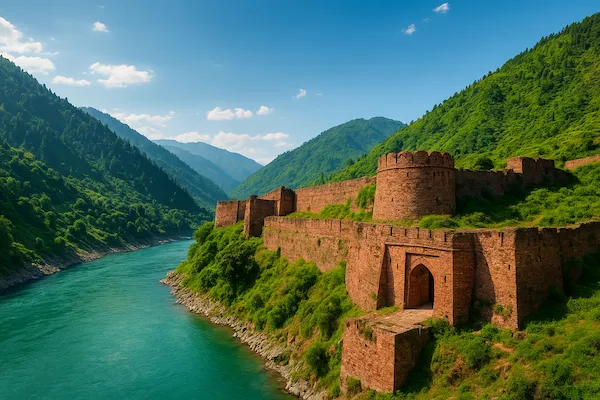
Kashmir is often referred to as “Paradise on Earth,” and it’s not hard to understand why. With its snow-capped mountains, crystal-clear rivers, and lush forests, combined with a rich tapestry of history, this place truly feels magical. Among its many treasures, the Muzaffarabad Red Fort stands out as a striking emblem of the region’s heritage. Nestled along the banks of the Neelum River, this ancient fortress embodies the spirit of Kashmir’s storied past.
If you find yourself in Azad Kashmir, make sure to add this fort to your must-see list. It offers breathtaking views, a deep sense of history, and a peaceful retreat from the hustle and bustle of city life.
Local name of Muzaffarabad Fort
When it comes to the local name for Muzaffarabad Fort, many travelers are curious, and the answer is quite straightforward. Locally, it’s called Rutta Qila, which translates to Red Fort. This name is derived from the reddish stones that were used in its construction, giving the fort a unique appearance that still catches the eye today.
So, whether you hear someone refer to it as the Red Fort, Rutta Qila, or Muzaffarabad Fort, they’re all talking about the same historic landmark.
Muzaffarabad Red Fort: A Gem of Kashmiri Heritage
Construction and History
The construction of the fort began in 1559 under the Chak rulers of Kashmir, who aimed to safeguard Muzaffarabad from Mughal invasions. Its strategic location on the western edge of the city was chosen for its natural defenses, with the Neelum River (formerly known as Kishan Ganga) encircling it on three sides. When the Mughal Empire took control of Kashmir in 1587, the fort lost some of its significance for a time. However, construction picked up again and was completed in 1646 during the reign of Sultan Muzaffar Khan of the Bomba Dynasty, who also established the city of Muzaffarabad.
Architectural Highlights
- The fort boasts thick stone walls, built with defense in mind.
- The eastern main gate is cleverly designed to withstand floods.
- There’s a terraced northern section with steps that lead right down to the river.
- Watchtowers and bastions provide a sweeping view of the valley below.
- You can still spot the ruins of a former inn near the entrance.
The architecture beautifully blends Mughal military style with Kashmiri craftsmanship, showcasing the skill of the designers and engineers who brought this project to life.
Abandonment and Dogra Period
In 1846, following the Treaty of Amritsar, Maharaja Gulab Singh of the Dogra dynasty took control of the area. He undertook the task of rebuilding and expanding the fort for both political and military reasons. His successor, Maharaja Ranbir Singh, wrapped up the renovations, and the fort served as a Dogra military base until 1926, when a new cantonment was established.
By 1947, when Dogra forces vacated Muzaffarabad, the fort was left abandoned once more. The 2005 earthquake added to its woes, causing further structural damage. Yet, despite all these trials, Red Fort Muzaffarabad stands tall as a proud emblem of the region’s rich heritage.
Why Visit Muzaffarabad Red Fort?
- Visitors flock to the fort not only for its historical significance but also for the unique experiences it offers:
- Breathtaking panoramic views of the Neelum and Jhelum rivers.
- Fantastic photography spots that capture both history and stunning natural scenery.
- Cultural insights through local guides and captivating folk tales.
- A serene atmosphere, providing a welcome escape from the hustle and bustle of city life.
For anyone keen on exploring Kashmir, the fort offers a delightful blend of culture and nature.
Location, Timings & Accessibility
- Location: Centrally located in Muzaffarabad, right at the meeting point of the Neelum and Jhelum rivers.
- Timings: Typically open from 9:00 AM to 5:00 PM (it’s best to check locally).
- Entry Fee: Usually minimal or free, depending on current management.
How to Reach:
From Islamabad: About 3.5 to 4 hours by car (roughly 138 km).
From Neelum Valley: Takes around 1 to 2 hours, depending on where you start.
Within Muzaffarabad: Easily
Cultural Flavor of Kashmir Tourism
When exploring Muzaffarabad and its surroundings, don’t miss:
- Food: Rogan Josh, Kashmiri Pulao, Gushtaba.
- Handicrafts: Kashmiri shawls, carpets, woodwork.
- Festivals: Traditional Kashmiri music, dance, and storytelling.
Travel Tips
- Visit during spring or autumn for the best experience.
- Hire a local guide at the fort for detailed history.
- Carry light jackets, as riverside weather can be cool.
- Combine your fort trip with Pir Chinasi or Neelum Valley.
- Be a responsible tourist: avoid littering and damaging heritage structures.
Red Fort Muzaffarabad’s Role in Kashmir Tourism Development
The fort isn’t just a relic—it’s a living reminder of Kashmir’s resilience. Despite wars, dynasties, and natural disasters, it still stands. Promoting it along with natural wonders like Neelum Valley can strengthen Kashmir tourism, attracting both domestic and international visitors. Heritage tourism here has the potential to support local economies, create jobs, and preserve cultural identity.
Vibes Verdict
Kashmir’s charm lies not only in its valleys and lakes but also in its history and heritage. The Red Fort Muzaffarabad stands as a proud symbol of Azad Kashmir’s past, offering travelers a chance to connect with centuries of culture while enjoying breathtaking scenery. So, whether you are a history enthusiast, an adventurer, or a casual traveler, remember this: Kashmir tourism is incomplete without a visit to the Red Fort of Muzaffarabad.
Also read, Pir Chinasi Travel Guide – A Hidden Gem of Kashmir Tourism in Muzaffarabad
FAQ Section
Locally, Muzaffarabad Fort is known as the Red Fort, or Rutta Qila, by the people in the area.
The construction of the fort began under the Chak rulers in 1559 and saw expansions during the Mughal and Dogra eras.
The Red Fort is situated right in the heart of the city, where the Neelum and Jhelum rivers meet.
Generally, the fort is open from 9:00 AM to 5:00 PM, but it’s a good idea to check locally for any slight changes in hours before you go.
Usually, entry is free or comes with a small fee, depending on the local management.