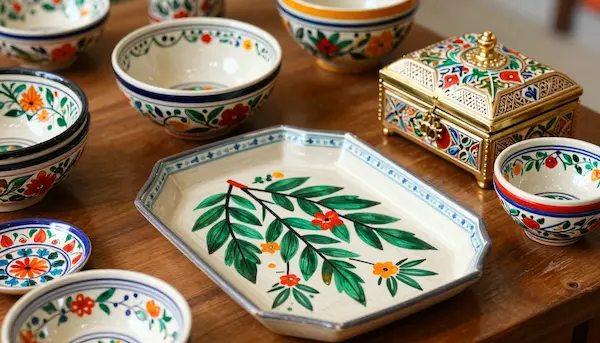
Kashmir is famous not just for its stunning landscapes but also for its vibrant cultural heritage, particularly in the realm of arts and crafts. One of the most cherished and timeless crafts is Kashmiri Papier-Mâché Art, a tradition that has flourished for centuries. This art form is celebrated for its bright colors, intricate designs, and delicate textures, showcasing the unique artistic flair of Kashmiri artisans.
From beautifully crafted bowls to elegant jewelry boxes, Kashmiri Papier-Mâché Art continues to enchant both locals and tourists alike. You might occasionally hear it called “paper mache,” but the traditional and authentic name remains Papier-Mâché.
History of Kashmiri Papier-Mâché Art
Kashmiri papier-mâché art boasts a rich heritage that stretches back centuries. Many historians believe it first emerged in the 14th century when Mir Sayyid Ali Hamadani, a Persian Sufi scholar, made his way to Kashmir with a talented group of artisans. Yet, some stories give credit to Sultan Zain-ul-Abidin in the 15th century for fostering and promoting this beautiful craft.
As time went on, Kashmiri artisans skillfully combined Persian floral designs with local motifs, resulting in a distinctive style that became their hallmark. The craft truly thrived during the Mughal era, with trays, vases, boxes, and other decorative pieces receiving immense admiration from royalty. The artistry involves two key roles: Sakht-sazi, which is all about shaping the paper pulp base, and Naqqashi, the delicate art of hand-painting intricate designs.
Today, Kashmiri Papier-Mâché Art is still alive and well, seamlessly blending traditional methods with modern designs, all while standing as a proud symbol of Kashmir’s rich cultural and artistic legacy.
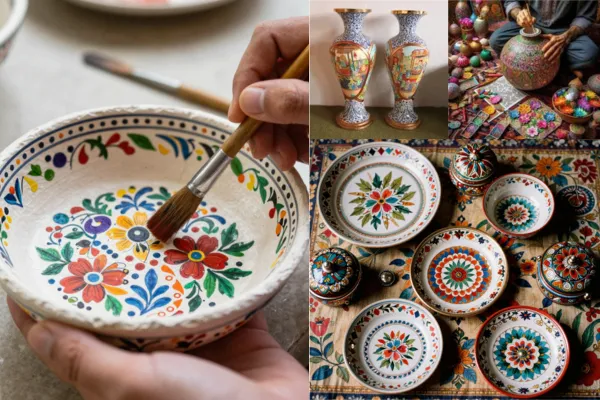
Techniques and Styles of Traditional Kashmiri Papier-Mâché Crafts
Creating Kashmiri Papier-Mâché Art is a meticulous and time-honored craft that demands both patience and skill.
- Preparing the Paper Pulp: It all starts with soaking recycled paper in water for several days until it softens up. This pulp is then blended with natural adhesives to create a smooth, pliable mixture. Shaping the Object: The pulp is carefully molded over wooden or clay forms to craft items like vases, bowls, trays, or boxes. Once shaped, these pieces are left to dry naturally in the sun.
- Sanding and Smoothing: After they’ve dried, the objects are gently sanded down to achieve a smooth finish, often enhanced with several layers of a chalk-based mixture for that extra touch of refinement.
- Hand-Painting and Decoration: Skilled artisans use fine brushes to paint intricate designs with natural dyes and metallic hues. Popular motifs include Chinar leaves, floral patterns, almond blossoms, birds, and Persian-inspired designs. Some pieces are adorned with gold or silver leaf for a touch of luxury.
- Finishing with Lacquer: To wrap it all up, each piece gets a coat of protective lacquer, giving it a polished look, water resistance, and durability.
Note: Different artisan families may use slightly different mixtures (such as adding muslin cloth or gesso), but the overall technique remains the same.
Popular Products
Kashmiri papier-mâché art is a beautiful craft that has found its way into a wide range of products, blending both beauty and utility. Here are some of the most beloved items you can find:
- Jewelry Boxes: These are beautifully painted boxes, perfect for keeping your precious ornaments safe.
- Bowls and Vases: Often adorned with stunning floral or geometric patterns, these pieces add a touch of elegance.
- Pen Holders (Qalamdan): These traditional desk accessories are not just practical but also serve as decorative elements.
- Trays and Coasters: Functional yet stylish, these items feature delicate designs that elevate any setting.
- Lampshades and Wall Hangings: They bring a splash of vibrant art into your home décor, making spaces feel alive.
- Decorative Eggs and Ornaments: Ideal as souvenirs or thoughtful gifts, these pieces capture the essence of Kashmiri craftsmanship.
Each of these products highlights the incredible skill of artisans and beautifully reflects the rich cultural heritage of Kashmir.
Identifying Authentic Kashmiri Papier-Mâché Art
As mass-produced replicas become more common, it’s crucial to recognize the true beauty of authentic handmade pieces. Genuine Kashmiri papier-mâché art boasts several distinctive features:
- A slightly textured surface that feels light and airy
- Unique hand-painted designs, ensuring that no two pieces are ever the same
- Rich, layered colors crafted from natural pigments
- Delicate brushwork showcasing intricate details
- A durable finish that gleams naturally thanks to lacquer
While you might see the term “papier-mâché” tossed around in stores or online, remember that real pieces are always made using traditional techniques.
The Cultural Significance of Kashmiri Papier-Mâché Art
Kashmiri Papier-Mâché Art is more than just a feast for the eyes; it’s a vibrant tapestry woven from centuries of tradition and cultural richness. This art form embodies the creativity, patience, and unwavering dedication of Kashmiri artisans who strive to keep this beautiful craft alive, even in the face of modern challenges. Each piece is like a storyteller, revealing not just artistic talent but also the deep history and identity of the Kashmiri people.
Modern Relevance and Revival
Despite the hurdles it has faced in recent years—like low earnings, rising material costs, and stiff competition from mass-produced replicas—Kashmiri Papier-Mâché Art remains a beloved part of Kashmir’s cultural heritage. Many artisan families are dedicated to keeping their skills alive, even as the craft fights to remain economically sustainable. On a brighter note, tourism, social media, and global artisan marketplaces are breathing new life into this art form. These platforms are helping more people appreciate the stunning beauty of authentic Kashmiri craftsmanship, fostering a renewed sense of admiration and giving artisans a glimmer of hope for what lies ahead.
Vibes Verdict
Kashmiri Papier-Mâché Art is so much more than just a pretty decoration; it embodies the rich artistic heritage, history, and cultural identity of the valley. Each piece, with its hand-painted designs and delicate lacquer finish, tells a unique story of craftsmanship and tradition. By valuing and supporting this art form, we play a part in preserving one of Kashmir’s most cherished cultural legacies.
Also read : Kashmiri Shawls: The Pride of Kashmir’s Artistry and Tradition
Kashmiri Papier-Mâché Art is a cherished traditional craft from Kashmir, celebrated for its beautifully hand-painted designs, vibrant colors, and intricate patterns. Skilled artisans transform paper pulp into stunning decorative items like bowls, boxes, trays, and vases, which they then paint and lacquer to create one-of-a-kind pieces of art.
This craft made its way to Kashmir in the 14th century, thanks to the Persian Sufi saint Mir Sayyid Ali Hamadani. However, some sources also credit Sultan Zain-ul-Abidin in the 15th century for its promotion. Local artisans then crafted a unique Kashmiri style that beautifully merges Persian influences with local motifs.
The process starts with preparing paper pulp, which is then molded into various shapes. After drying, artisans sand the pieces for a smooth finish, hand-paint intricate designs using natural pigments, and finally apply a protective lacquer. Some artisans even add layers of cloth or plaster for added durability.
You’ll find a variety of popular products, including jewelry boxes, bowls, vases, pen holders (qalamdan), trays, coasters, lampshades, wall hangings, decorative eggs, and ornaments. These items beautifully blend functionality with artistic flair.
Authentic Kashmiri Papier-Mâché Art has a slightly textured feel, features hand-painted designs (no two pieces are alike), showcases rich layered colors, delicate brushwork, and boasts a polished lacquer finish. In contrast, mass-produced replicas often have printed or uniform designs.
Even though the craft is struggling with the rise of cheaper mass-produced goods and a dwindling number of artisans, there’s a noticeable uptick in interest from tourists, collectors, and online shoppers.