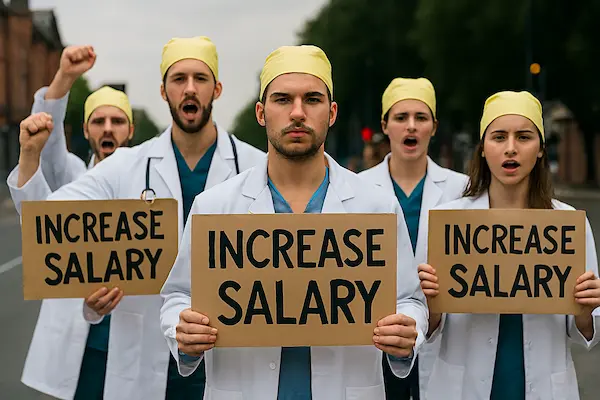
Thousands of doctors have started a five-day strike to demand better pay and working conditions, putting hospitals all over England under extreme strain. Several hospitals have already been forced to temporarily close emergency rooms and halt non-urgent services due to the industrial action, which is currently in its second day.
Nearly 70,000 procedures and appointments could be canceled this week due to the strike, according to health officials, leaving patients with uncertainty and lengthy delays. Due to the nation’s ongoing super flu outbreak and the sharp increase in hospital admissions, the situation has gotten worse.
Prime Minister Sir Keir Starmer has emphasized that vital care must continue in spite of the conflict, urging striking physicians not to desert patients. In order to lessen the strain on hospitals, NHS England has also released guidelines encouraging the public to get vaccinated against the flu and asking patients to attend scheduled appointments unless contacted otherwise.
The strike draws attention to the escalating conflict between medical unions and the government. Opponents contend that the action is harming vulnerable patients needlessly, particularly the elderly, who might experience treatment delays during the hectic winter months. However, physicians maintain that the walkout is required to ensure equitable pay and long-term working conditions.
This crisis highlights the precarious situation of the UK healthcare system, where labor disputes, seasonal flu, and growing demand are all colliding. The outcome of this strike, which has an impact on thousands of patients, may influence future talks between the government and medical professionals.
Also read: London Faces Flu Wave: Schools Closures and Safety Measures Announced