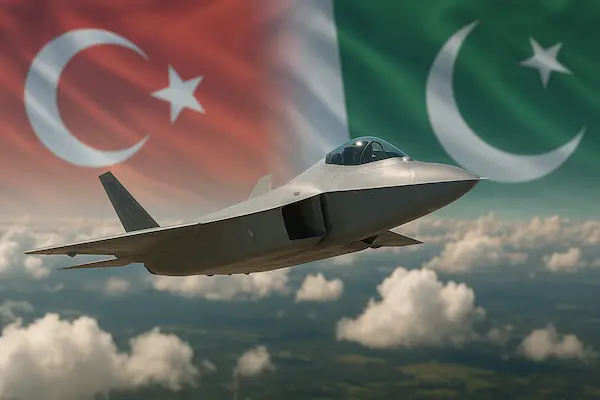
The KAAN fighter jet 2025 partnership between Pakistan and Turkey ushers in a new era of defense cooperation between the two countries. Although Turkey has already helped Pakistan by upgrading F-16s and co-producing warships, this most recent move advances cooperation.
Turkish Aerospace Industries (TAI) is in charge of the KAAN program, which aims to create a fifth-generation stealth fighter jet with sophisticated radar, intelligent avionics, and exceptional maneuverability. The aircraft seeks to lessen dependency on foreign suppliers while competing with contemporary aircraft such as the F-35 and J-20.
Pakistan is a major participant. According to reports, a joint production facility is being established and hundreds of Pakistani engineers are joining the project. This guarantees that Pakistan is a co-developer of next-generation technology rather than merely a buyer.
One of the most cutting-edge fighters in development, the KAAN jet will have stealth design, electronic warfare systems, and AI-powered flight control. Testing of prototypes has already begun, and full deployment is anticipated by 2028.
Pakistan views its 2025 membership in KAAN as a strategic investment in aerospace innovation rather than just a defense upgrade. Islamabad has access to state-of-the-art equipment, production capabilities, and training by collaborating with Turkey.
According to defense analysts, this collaboration will improve regional security and create opportunities for future cooperation in cyber defense, drones, and missile systems. Additionally, it shows that Pakistan is committed to developing its own capabilities rather than depending entirely on imports.
Pakistan’s participation enhances political ties and adds technical expertise, which benefits Turkey as well. By working together, the two nations are establishing themselves as leaders in defense innovation in the region.
A common goal is reflected in the KAAN program: creating a cutting-edge air force capable of handling new challenges. Pakistan has an opportunity to update its fleet and encourage local engineers to work on top-notch projects.
Also read : Pakistan Türkiye Energy Agreement 2025: $300 Million Deal Signed for Oil Exploration