
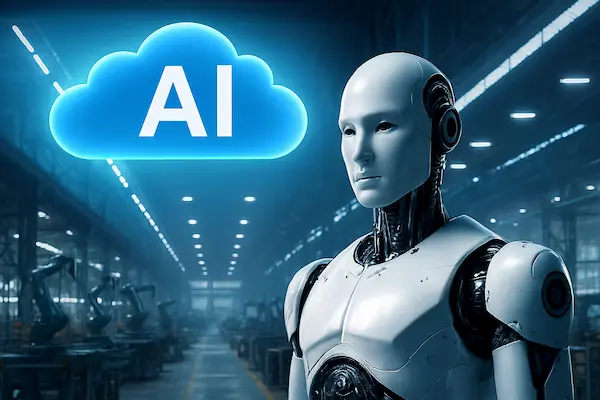
Elon Musk’s audacious prediction that AI and robotics may end traditional jobs within the next 20 years has once again sparked international debate. Speaking about the speed at which technology is developing, Musk hypothesized that artificial intelligence might soon replace most labor and production tasks, changing how societies operate and redefining what work is.
The world is moving toward a time when employment won’t be a financial necessity, according to Musk. Alternatively, people may decide to work for personal fulfillment, creativity, or passion. Centuries of economic systems predicated on the idea that human labor is necessary for survival are called into question by this vision. Musk contends that people will be free to pursue careers and projects that inspire them rather than jobs that just pay the bills if machines are able to perform the majority of tasks.
According to Musk, the world is headed toward a time when employment won’t be a financial necessity. On the other hand, people might choose to work for passion, creativity, or personal fulfillment. This vision challenges centuries of economic systems based on the notion that human labor is essential for survival. Musk argues that if machines can handle most tasks, people will be free to pursue careers and projects that inspire them instead of jobs that merely pay the bills.
Artificial intelligence is already changing a number of industries. AI systems are increasing productivity by automating repetitive tasks in a variety of industries, including manufacturing, logistics, healthcare, and education. Robotics is developing at a similar rate, with autonomous devices and humanoid robots that can carry out difficult tasks that were previously unthinkable. According to Musk, these technologies will be advanced enough to replace the majority of traditional jobs in ten to twenty years.
There will be difficulties with this change, though. Economists warn that if institutions and governments don’t change, there could be widespread unemployment, growing inequality, and social unrest. To guarantee that people can prosper in a post-labor economy, policies like universal basic income (UBI) may be required. Education systems will also need to change, emphasizing creativity, flexibility, and emotional intelligence over memorization.
Although Musk’s vision is theoretical, it highlights how AI will fundamentally alter humankind’s future. One thing is certain: robotics and artificial intelligence are changing the world economy at a rate never seen before, regardless of whether work actually becomes optional. The current challenge is to responsibly steer this transition so that people are empowered by technology rather than replaced by it.