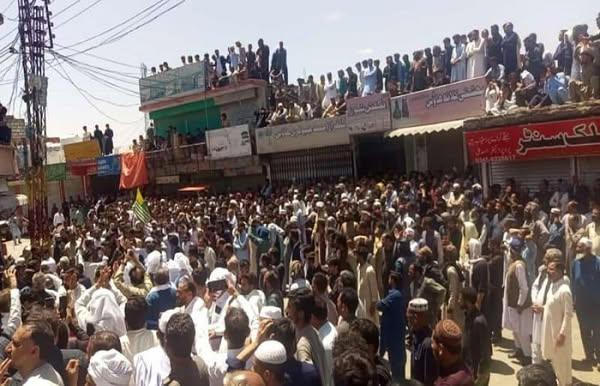
Historic Meeting for Azad Kashmir’s Future
On October 3, 2025, a significant consultative and negotiation meeting unfolded at the Pearl Continental Hotel in Muzaffarabad. This gathering brought together the Awami Action Committee (JAAC), Federal Ministers, and representatives from the Government of Azad Jammu and Kashmir. Under the guidance of Prime Minister Mian Shahbaz Sharif, the meeting aimed to tackle long-standing public and administrative challenges in Azad Kashmir.
Former Prime Minister Raja Pervez Ashraf chaired the session, with Federal Ministers such as Rana Sanaullah, Ahsan Iqbal, Amir Muqam, and Dr. Tariq Fazal Chaudhry present. From the Government of Azad Kashmir, Diwan Ali Chughtai and Faisal Rathore were in attendance, while Raja Amjad, Shaukat Nawaz Mir, and Anjum Zaman Awan represented the Awami Action Committee (JAAC).
Relief and Compensation for Victims
A key highlight of the Awami Action Committee Azad Kashmir meeting in 2025 was the approval of financial compensation for those impacted during the protests and violent incidents in early October. Families of the deceased will receive benefits equivalent to those provided to law enforcement agencies. Each injured individual will be compensated with Rs 1 million, and within 20 days, one dependent of each deceased person will be offered a government job. These measures represent a significant humanitarian effort by the government, showcasing a collective commitment to peace and justice.
Education, Health, and Administrative Reforms
The meeting also announced the creation of two new education boards in Muzaffarabad and Poonch, increasing the total number of boards in Azad Kashmir to three. All boards will be affiliated with the Federal Board of Education in Islamabad, with the process set to be completed within 30 days. In terms of healthcare, MRI and CT scan machines will be installed in every district hospital, and funds for the Health Card Scheme will be released within 15 days to ensure that all citizens have better access to medical care. Administrative reforms will include a reduction in the number of cabinet ministers and advisors to 20, merging unnecessary departments, and aligning the Accountability Bureau with Pakistan’s NAB laws for transparent governance.
Infrastructure and Economic Development
The Government of Pakistan has committed Rs 10 billion to enhance the electricity system in Azad Kashmir. Alongside this, feasibility studies for two significant tunnels — Kahuri/Kamsir and Chaplani — are set to kick off soon, thanks to the Saudi Fund initiative. Other key development initiatives include building bridges in Gulpur and Rehman (Kotli), regularizing lands impacted by the Mangla Dam Raising Project, and launching major water projects across 10 districts within this financial year.
Monitoring and Implementation Committee
To ensure these initiatives are carried out effectively, a Monitoring and Implementation Committee will be established. This committee will include representatives from the Federal Government, the Azad Kashmir Government, and JAAC. Their role will be to track progress, resolve any disputes, and guarantee that each reform is executed on time.
In conclusion, the Awami Action Committee Azad Kashmir meeting in 2025 marks a significant milestone, showcasing the collaboration between the federal and Azad Kashmir governments. The broad range of decisions — covering relief, education, infrastructure, and governance — is designed to promote transparency, enhance public welfare, and solidify the region’s socio-economic foundation for the future.
Also read: Shehbaz Sharif Responds to Action Committee — High-Level Team to Hold Talks in Muzaffarabad